
A Galvorn® Swing’s Journey to Denmark
It was a Tuesday morning in June and we had a decision to make: do we accept failure and apologize, or do we do our damndest to prove the future is ours to make.
A Galvorn rope for a swing originally destined for Denmark was sitting in some U.S. warehouse with a carrier and little hope of making it to Allinge-Sandvig by Friday morning. This small town on the island of Bornholm in Denmark was about to host the country’s annual Folkemødet, a democracy festival where policymakers, researchers, industry leaders, and the public gather to discuss society’s biggest challenges and share ideas. The permanent population of the island is just under 40,000. The festival typically brings between 60,000 and 100,000 visitors. It’s a big deal.
Our customer, the Novo Nordisk Foundation CO₂ Research Center (CORC), is a champion of breakthrough technologies for carbon capture, sequestration, and utilization. They commissioned the Galvorn swing for their Carbon Forum exhibit at Folkemødet to showcase the reality of our advanced carbon material: it’s stronger, lighter, conductive, and far more sustainable to produce than metals. Most importantly, it’s real.
By this Tuesday, the rope was supposed to be safely in CORC’s hands, ready to show off the carbon-based, low-carbon future. Instead, it was sitting in a warehouse in Cincinnati.
How we got to this Tuesday in June
DexMat makes fiber, yarn/wire, fabric, and film. We do not typically make rope for swings. But we’d done it the year prior for Carbon Hub in Houston and CORC wanted to bring the magic to Folkemødet.
The order was confirmed just 4 weeks prior to the delivery deadline of June 11th. In the midst of one of the highest production months to date, DexMates additionally committed to delivering a braided rope a couple of meters long and five to six millimeters in diameter.
So began the perfect storm, factory style.
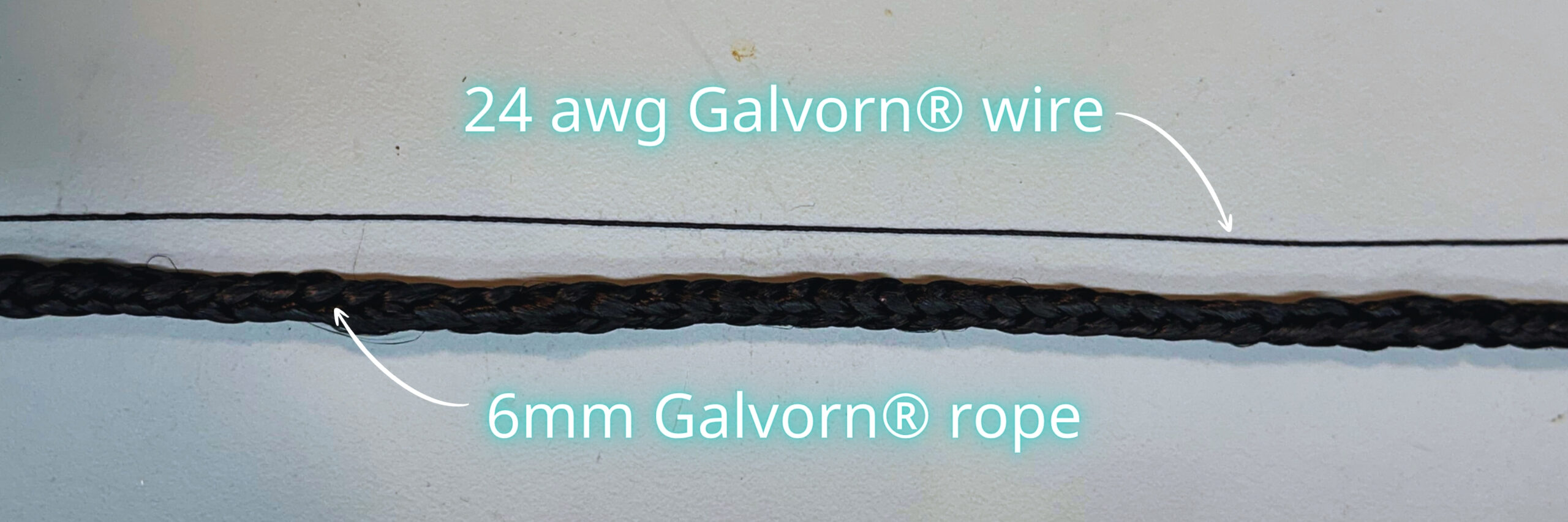
Along the way, production ran into a series of technical challenges. Building the rope required adapting existing processes for a much larger product than the team typically manufactures: think 26-24 gauge (0.4 - 0.6 mm) wire vs. 6mm rope (10-15x thicker in diameter). To all the rope makers of the world, we now have an even more profound appreciation for your expertise.
Above: Splicing rope is NOT for the faint of heart.
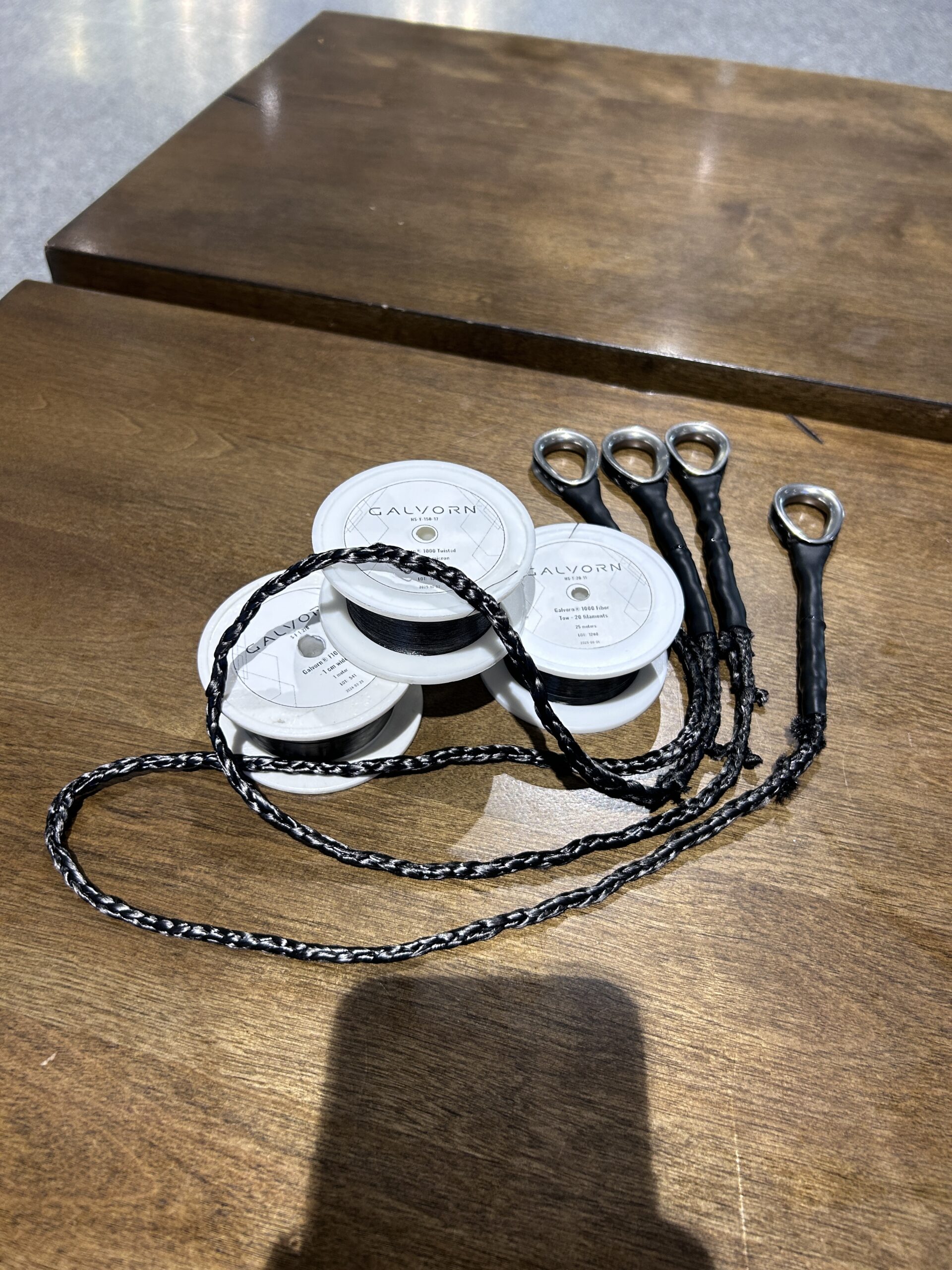
Once the rope was complete, another challenge emerged. In order to attach the hardware needed for the swing, each end of the rope had to be carefully spliced by hand, taking apart the braided structure strand by strand before weaving each strand back into the body of the rope. Earlier versions of the rope had used a simpler termination method that took less than an hour per splice, but this design required a different approach, and each splice took nearly five hours and several DexMates to hold the different strands. Cody Jones, Mechanical Engineer, worked out a splice method on a tight turnaround. He then taught it to Barivure Norbana, Mechanical Engineer, and Oliver S. Dewey, PhD., Director of Manufacturing & Scale-Up, all so that the first rope could ship on time.
Realizing that this second round of rope making wasn’t proving as smooth as the first from a year prior, multiple DexMates set aside their originally planned work to help complete this meticulous process. After days of combined effort and precision, the rope was finished, packaged, and delivered to the shipping center in Houston on the previous Friday afternoon, just in time for the scheduled international shipment. Or so we thought.
Although the package had been dropped off before the day’s cutoff, no carrier pickup ever arrived that evening. The shipment sat in Houston throughout the weekend, and nobody at DexMat knew anything had gone wrong until CORC reached out Tuesday morning asking where the rope was. That’s how we learned it was stuck at the carrier's hub in Cincinnati. By Tuesday morning we were at this crossroads: accept defeat, or…. keep trying.
We reminded ourselves: the future is ours to make. We chose to keep going.
The only alternative was to build a new rope from scratch and fly it to Denmark ourselves. That fine Tuesday morning, Barivure Norbana, Cody Jones, Oliver Dewey, and Colin Young, Senior Research Scientist, worked in parallel all day to restart the hours-long splicing process on yarn we fortunately had left over, while others worked logistics: booking flights from Houston to Copenhagen (big plane), Copenhagen to Bornholm (tiny plane), and finding accommodation on an almost fully booked island thanks to the festival. DexMates were mapping timelines down to the hour.
Later that afternoon, a second rope was complete with splices and hardware, and Colin Young left the factory to hand deliver it to Alex Giangiorgi, Laboratory Research Technician, who bravely volunteered to drop everything and embark on this last minute journey.
Left: All DexMate hands on deck.
Typically, Alex focuses on quality control for Galvorn fibers and yarns and improving the measurement systems that support manufacturing. Today he was packing a suitcase and destined (planned down to the hour, mind you) for Allinge-Sandvig, Bornholm, Denmark.
He flew from Houston to Copenhagen via London, making friends with the TSA. Fun fact: Galvorn does not show up on x-ray.
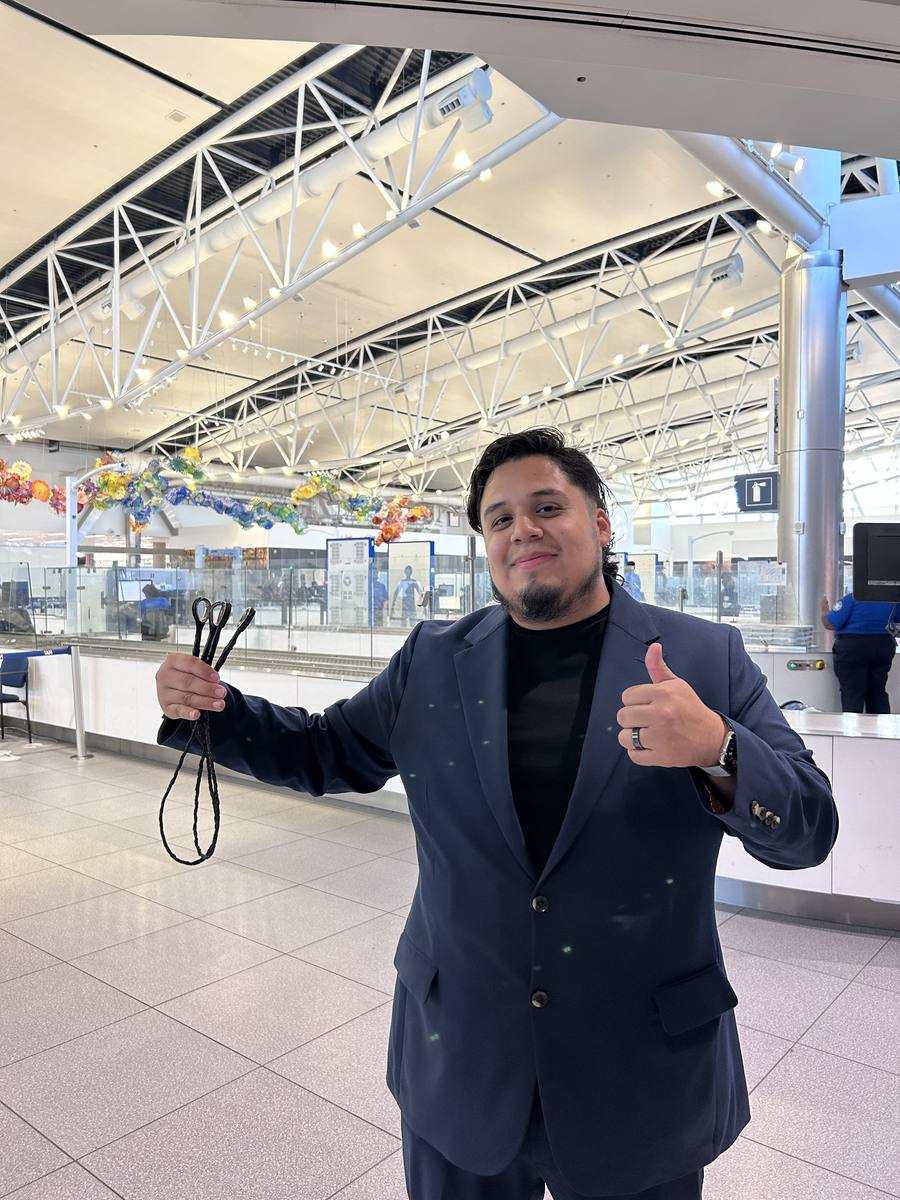
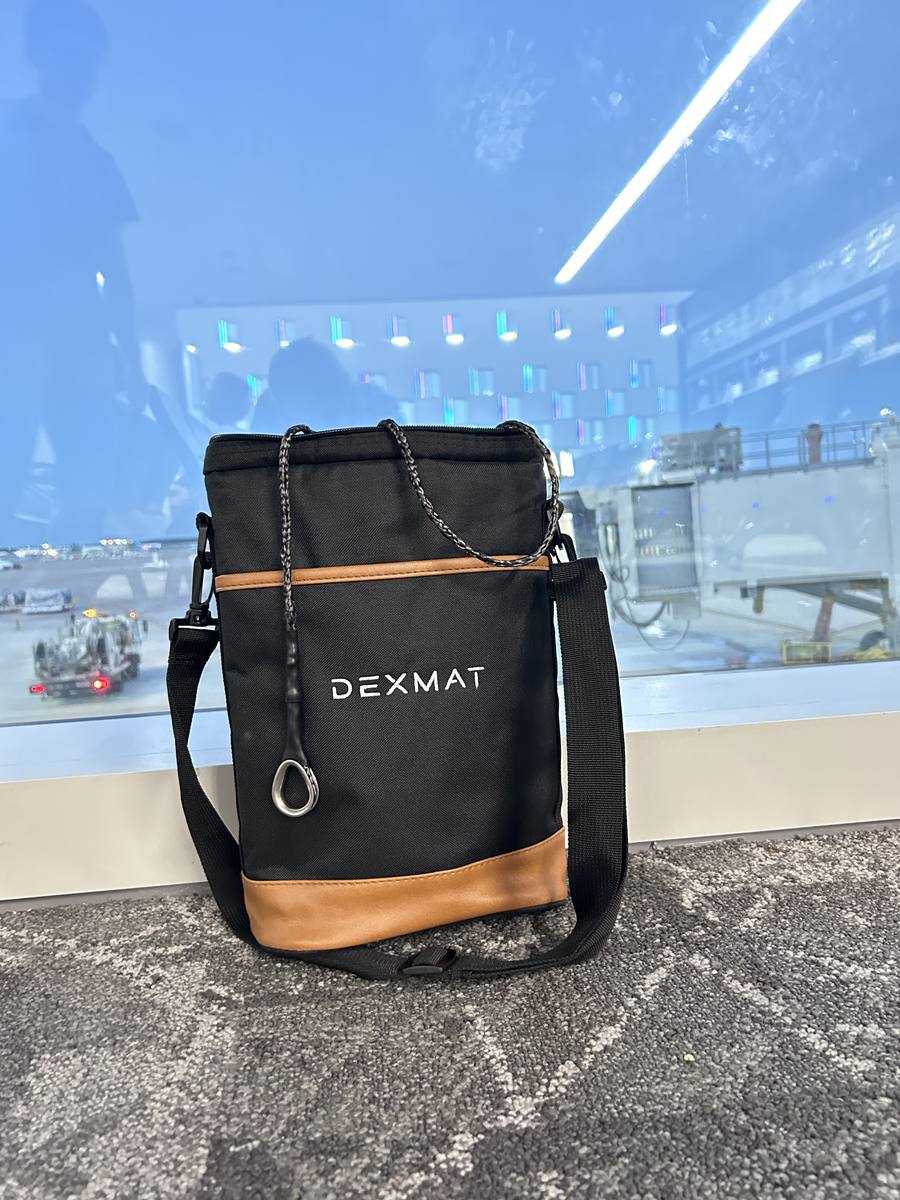
Then from Copenhagen he caught the last flight to the island of Bornholm, arriving just before midnight. In the wee hours of the morning, he made it to his Airbnb… Fortunately, bad entry / code instructions were not part of this perfect storm.
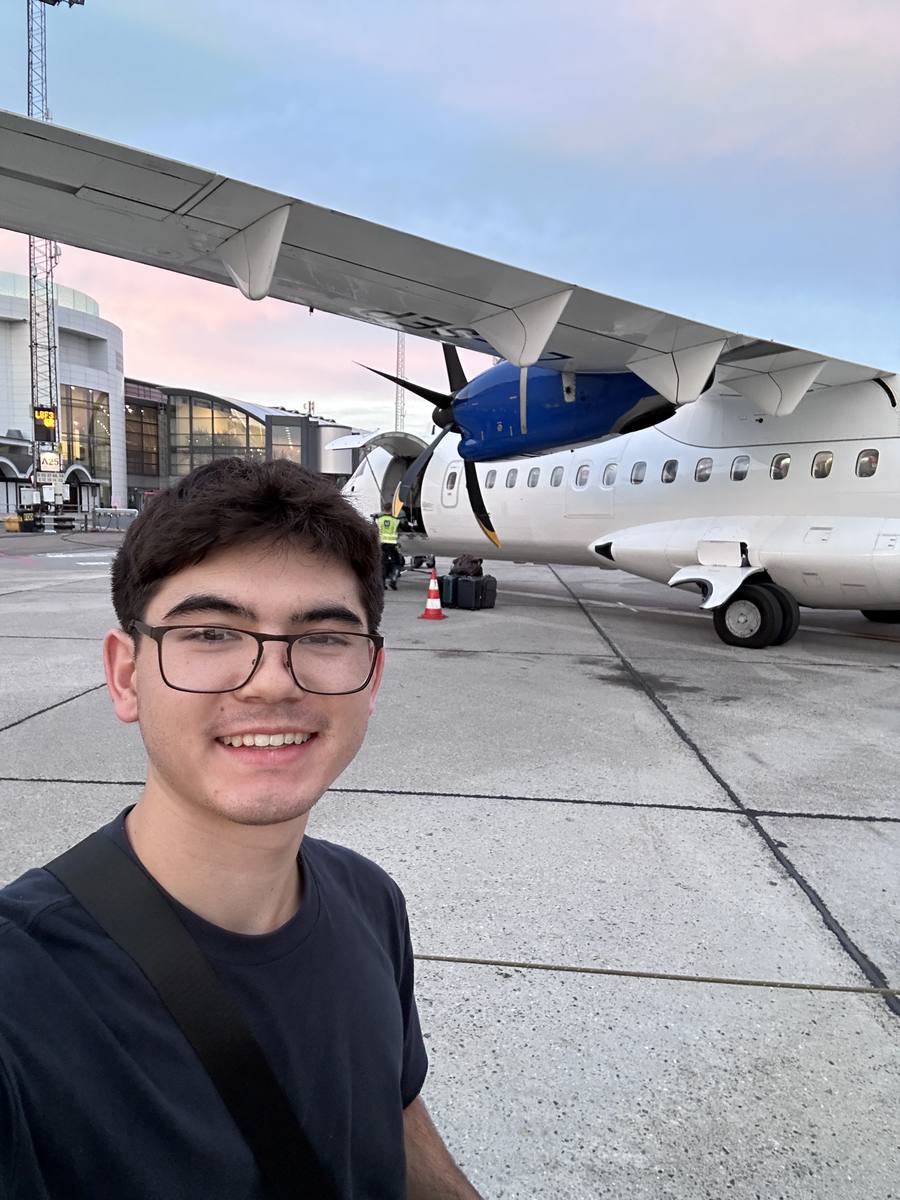
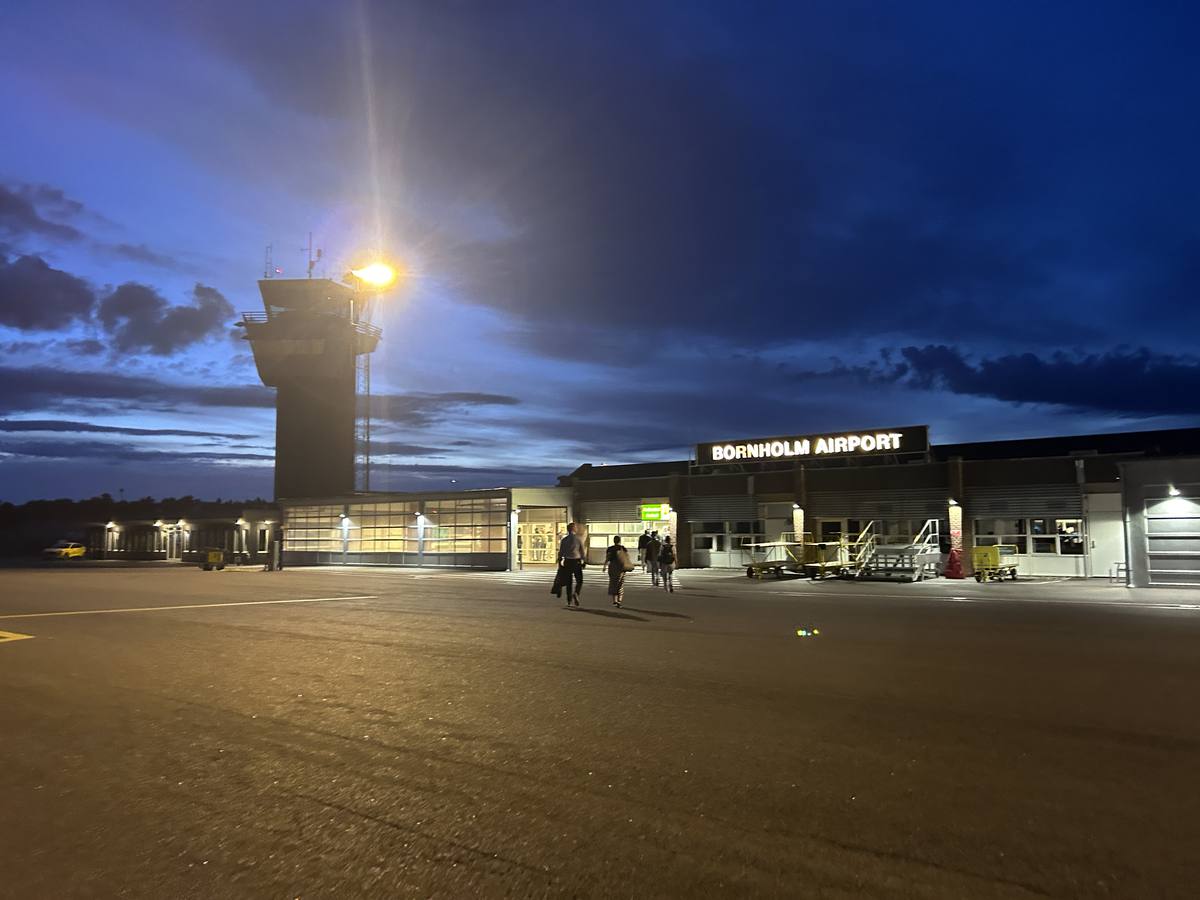
Early that morning, he took a taxi to the edge of Allinge-Sandvig, because they shut down all the roads for the festival, and met our now delighted customer, hand delivering the Galvorn rope for the swing.
The original carrier was still nowhere to be found.
The swing was installed, and the event moved forward as planned: wonderfully.
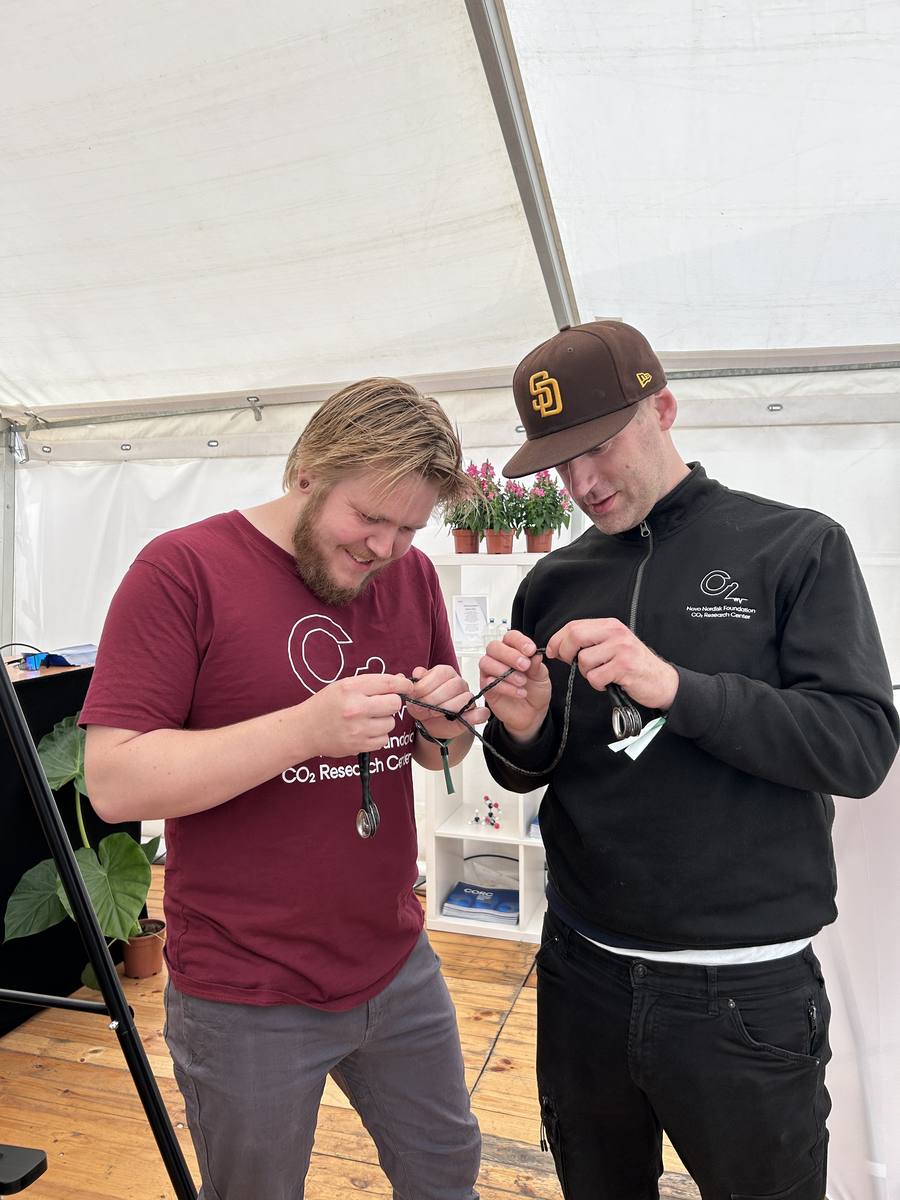
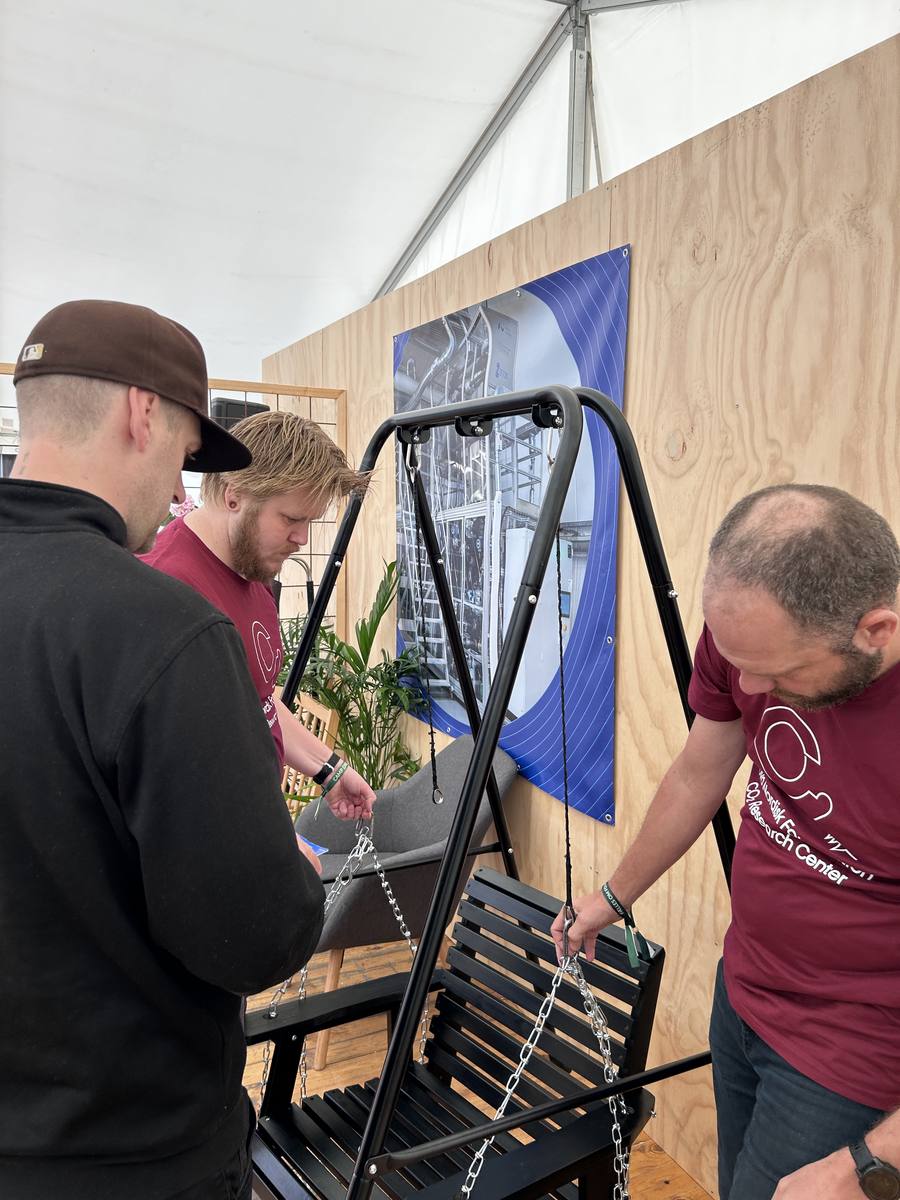
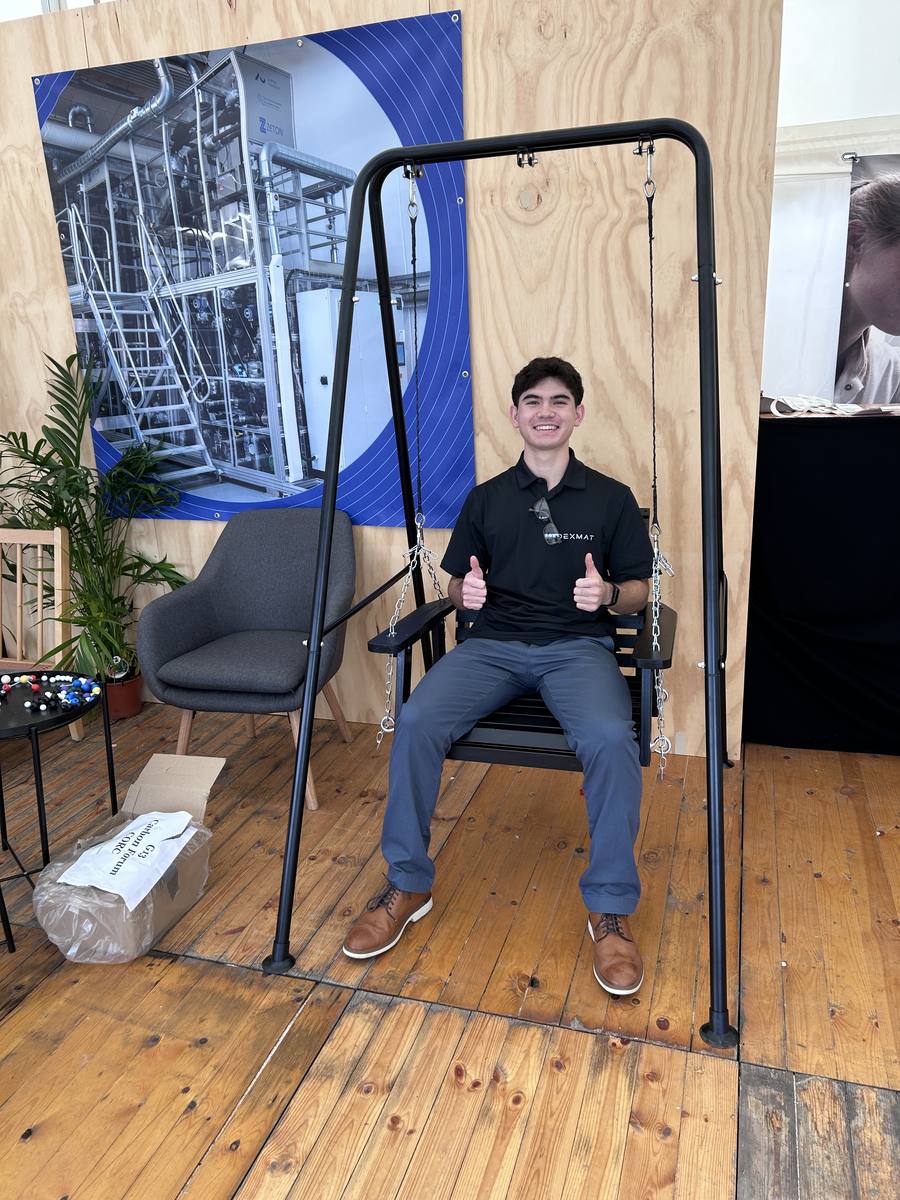
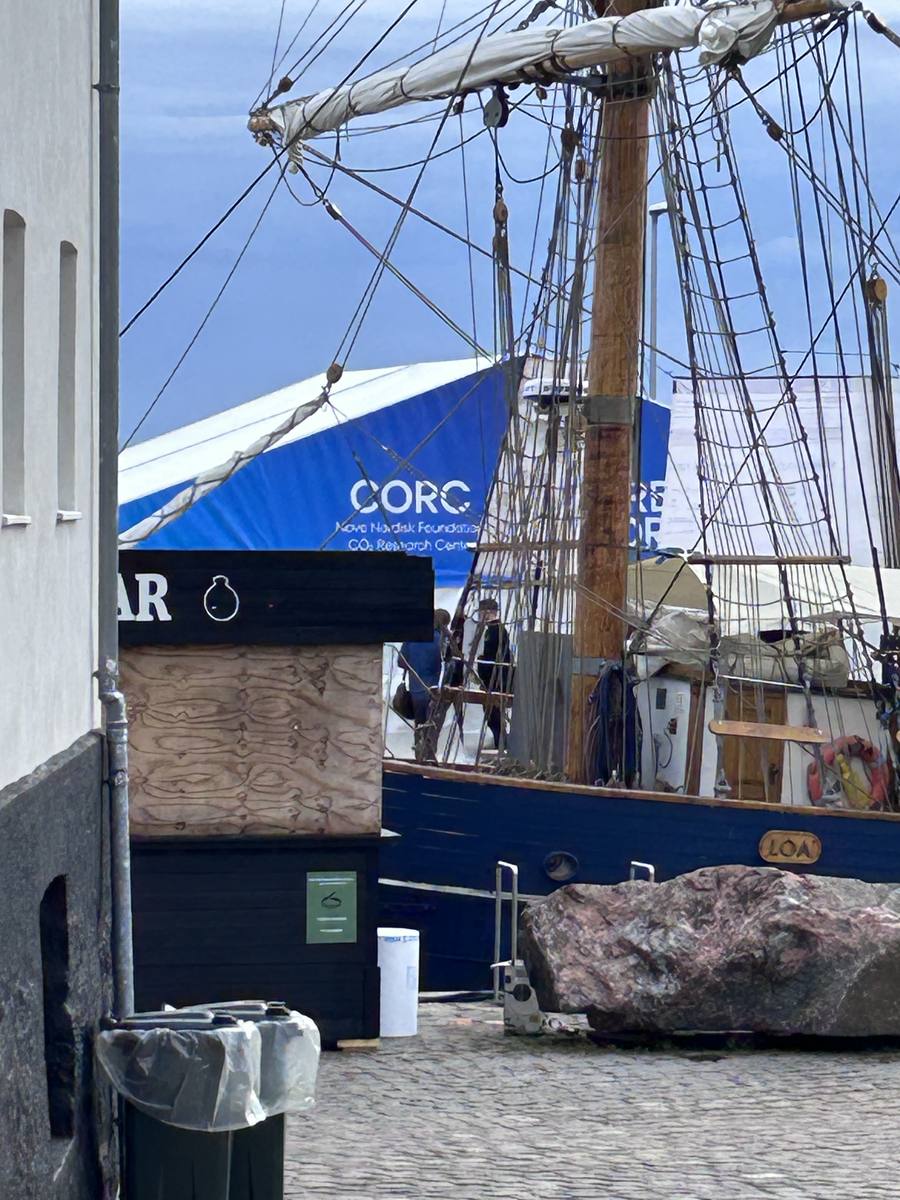
The Lessons We Learn (and Live)
The easiest response to a missed shipment would have been to explain what happened and accept the consequences. International shipping delays occur, production challenges happen, and most customers would (begrudgingly) understand. There are many lessons we’ve taken from the choices we made leading up to that Tuesday. Some are related to production planning. Some are related to equipment and maintenance. All are part of the learning process of a startup.
But the most important lesson: the future is what we make it.
This story is one, albeit dramatic, proofpoint of that. But it’s a lesson every DexMate embodies: whether it’s showing up every day to scale up the production of Galvorn, enabling our supply partners to bring costs down, or developing the markets hungry for something better.
On that Tuesday in June, we chose to be a company that delivers as we promised: a swing to a big festival on a tiny island in Denmark. But the truth is that we make some version of that choice in the many incremental decisions we make along the way, whatever day of the week. These choices shape our trajectory and ultimately our impact, every one of them proof that the future is what we make it.