

If you've spent any time specifying materials for demanding applications—aerospace wiring, high-speed data interconnects, automotive electrification—you've probably hit the same wall. You need a conductor that's light. And strong. And flexible. And thermally stable. And you've been told, implicitly or explicitly, that you can't have all of those things in one material.
That constraint isn't a law of physics. It's a legacy of the materials we've been working with.
The advanced carbon materials category is changing that, but slowly, and not uniformly. Understanding where it actually stands today, and where it's going, is increasingly a competitive advantage for engineers doing serious material selection.
The next industrial revolution runs on conductivity
The defining applications of the next decade—AI data infrastructure, electrification, advanced defense and aerospace systems—share a common requirement: they all need to move electrons, reliably, at scale, under demanding conditions. Conductivity isn't a nice-to-have in these systems. It's the prerequisite everything else is built on.
The incumbent conductor, copper, is running into two walls simultaneously.
The first is supply. A recent study from S&P Global found that global copper demand is projected to surge 50% by 2040, driven by electrification and AI infrastructure build-out. Supply is on track to peak in 2030 and then decline. New mines take an average of 17 years to reach production, meaning the gap cannot be closed in time. Six countries control two-thirds of global copper mining, and China dominates smelting capacity. Dependence on copper is no longer just an economic risk, it's a national security one.
The second wall is performance. Even where copper is available, it increasingly isn't enough. Next-generation aerospace wire harnesses need to be dramatically lighter. High-frequency data interconnects at 400G and 800G speeds need a conductor whose performance doesn't degrade the way copper does as frequency rises. EV platforms need wiring that survives mechanical stress cycles copper simply wasn't designed for.
The materials that built the modern world are hitting their limits. What the next industrial revolution needs is a new conductive foundation—one that doesn't just replicate copper's function but expands what's possible.
That's the lens through which to evaluate the advanced carbon materials landscape.
Mapping the landscape: what happens to properties when you scale
"Advanced carbon materials" is a broad label applied to materials with almost functionally nothing in common. Engineers evaluating options are often comparing things that aren't comparable. They have no framework for understanding why they behave so differently or what each is actually suited for.
The most useful organizing principle is a single question: what happens to the properties that matter when you scale the material to industrial form factors? The answer divides the landscape into four distinct categories, each with a different ceiling.
Carbon fiber—strong at scale, but conductivity was never the point
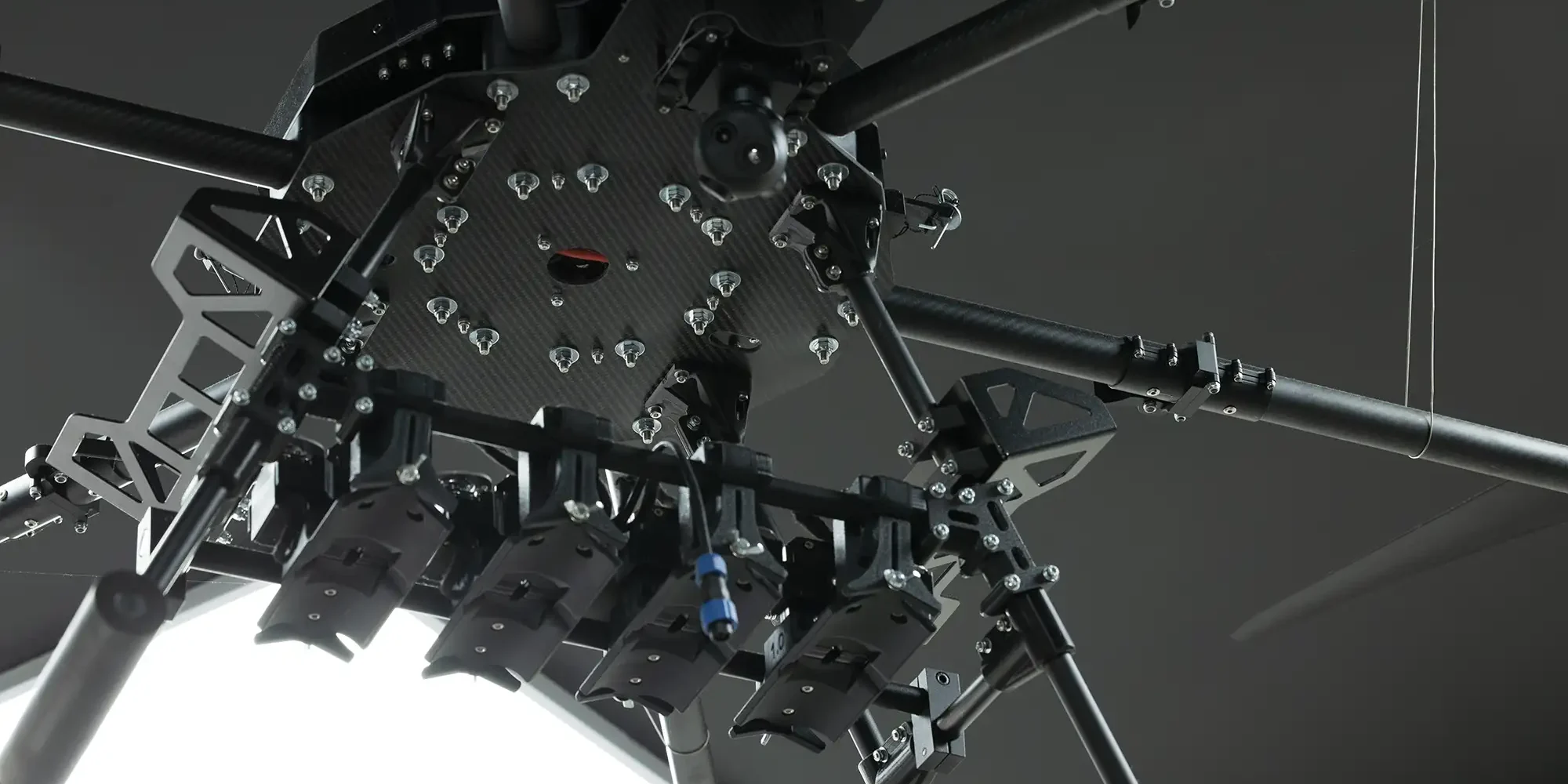
Carbon fiber is the most commercially successful advanced carbon material in history, and for good reason. It delivers exceptional strength-to-weight and has transformed aerospace structures, automotive chassis, and high-performance equipment over six decades. In the composites world, it genuinely is a platform material: aircraft wings, Formula 1 chassis, and wind turbine blades are all built around it.
But reaching that position took the better part of 60 years, and the reasons are instructive. Carbon fiber production is notoriously complex and energy-intensive. At approximately 370 MJ per kilogram, it requires more than six times the energy to produce as copper and more than twelve times that of steel, according to research published in PNAS. The precursor conversion process has proven stubbornly difficult to cost-reduce at volume. Recyclability remains a meaningful limitation. Mechanical recycling degrades fiber length and properties, and chemical recycling is still not at commercial scale. Even today, carbon fiber hasn't fully crossed into mass-market applications despite decades of sustained investment.
The deeper point for engineers evaluating the advanced carbon landscape: carbon fiber's properties are inherently bulk properties, they survive the transition to industrial scale. But conductivity was never part of the value proposition. Carbon fiber has no answer for the applications that define the next industrial revolution. You cannot wire an aircraft with it. You cannot build a data center interconnect from it. You cannot replace copper with it.
It succeeded as a platform—in its domain. The next industrial revolution requires a platform for a different one.

Graphene—extraordinary properties that don't survive the journey to scale
Graphene's properties at the monolayer are genuinely remarkable. A single atom-thick sheet of carbon exhibits extraordinary conductivity, mechanical strength, and thermal performance. The scientific excitement has been justified.
The problem is physics, not manufacturing. The extraordinary properties exist in monolayer graphene. Stack layers to produce something you can actually handle and use industrially, and you're making graphite. The properties degrade rapidly toward bulk carbon. The form factor that produces the remarkable properties is physically incompatible with industrial use at scale. That isn't a manufacturing problem waiting to be solved with better equipment or more investment. It's a boundary that physics imposes.
Graphene found its primary industrial role as an additive. Enhancing a polymer matrix, improving a coating, boosting the conductivity of a composite and not because that was the original ambition, but because it's the only form where some of its properties can be partially transferred to something else at scale. The performance gains are real but incremental. Graphene makes other materials modestly better. It cannot be the foundation itself.

Carbon nanotubes as additives—the same ceiling, a different route
Carbon nanotubes as a powder or dispersion are commercially available and widely used in batteries, polymers, conductive coatings, and composite reinforcement. The individual nanotube properties are impressive, and the commercial applications are real.
But CNTs in additive form share the fundamental constraint of graphene additives: properties are partially transferred to something else, not delivered directly. Dispersion is complex, handling requires proprietary processes, and the performance gains, while measurable, are incremental improvements on existing material systems rather than a new foundation. Like graphene, CNT additives make other materials better. They are ingredients, not platforms.
Learn more about the differences: carbon nanotubes vs. carbon nanotube fibers.

CNT fiber—where the physics finally works at scale
This is where the landscape changes, and understanding why requires a brief look at the underlying physics.
Individual carbon nanotubes exhibit extraordinary conductivity and mechanical strength at the molecular scale. The critical question for industrial application is whether those properties survive when individual nanotubes are assembled into something large enough to use.
With graphene, the answer is no. Stacking destroys the monolayer properties. With CNT additives, the answer is partial. Some properties transfer but are diluted into a host material. With CNT fiber, the answer is fundamentally different: the fiber architecture maintains the axial alignment that gives nanotubes their character. You're not stacking and degrading. You're bundling and retaining. Macro-scale CNT fiber doesn't fully replicate the properties of individual nanotubes, but it inherits enough of that structural character to deliver a combination of conductivity, strength, lightweighting, and flexibility that no other macro-scale material can match. Scaling up doesn't strip away the properties that made the material compelling in the first place.
That's the structural physics argument for why CNT fiber is categorically different from every other advanced carbon material, and why carbon as a platform material had to wait for this form factor. It isn't that nobody tried hard enough with graphene or CNT additives. The physics pointed here.
A small number of companies are working to bring CNT fiber to market. The challenge—and it's a significant one—is producing it consistently, at industrial quantities, in form factors that integrate with standard manufacturing processes, while maintaining the multi-property performance that makes it worth using in the first place. That combination has proven elusive for most.
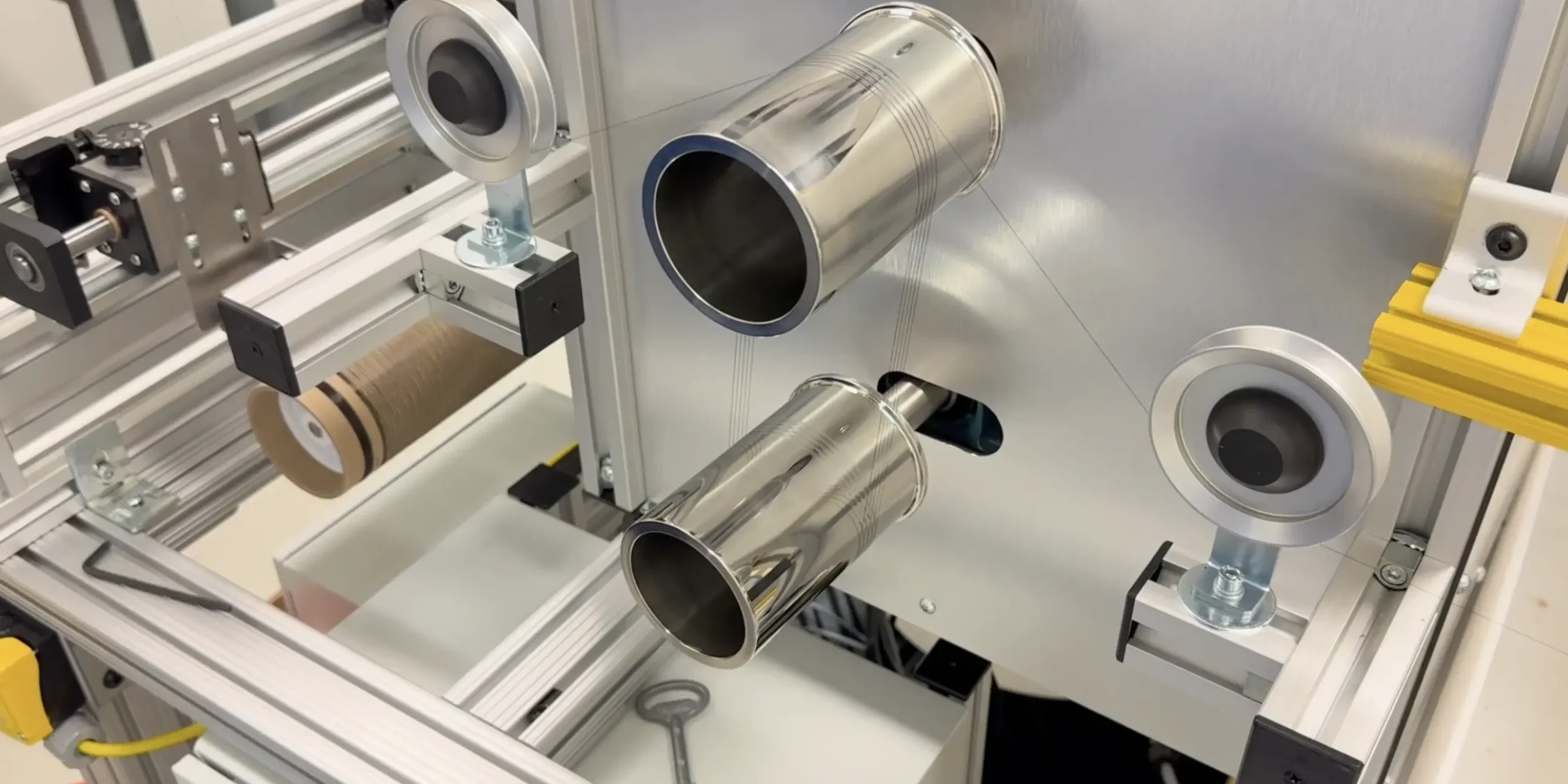
Galvorn, made by DexMat, is CNT fiber in production today. It delivers conductivity alongside strength, lightweighting, flexibility, and environmental resilience. Available in fiber, wire/yarn, fabric, and film form factors, it is produced at our Houston facility and shipped globally to customers in aerospace and defense, wire and cable, automotive, and energy. It is a production material actively being evaluated and developed by Tier 1 manufacturers across our target industries.
There's a further dimension worth noting—one that points to what carbon, as a platform material, can become. Research published in PNAS by Rice University's Matteo Pasquali, DexMat's Co-Founder and Chief Science Advisor, and Shell's Carl Mesters demonstrates that CNT fiber can be produced from natural gas via methane pyrolysis—a process that requires a fraction of the energy needed to mine and refine legacy metals. Primary metals production consumes more than 12% of global energy output annually; copper alone requires approximately 60 MJ per kilogram to produce. The methane pyrolysis route generates clean hydrogen as a valuable coproduct, meaning the process can be net energy positive in the thermodynamic limit. As AI infrastructure build-out strains global energy supply and industrial energy costs become a strategic concern, the production pathway matters, not just the material properties. CNT fiber can offer both: the multi-property performance the next industrial revolution demands, produced through a process that works with the world's energy constraints rather than against them. The science is proven. The pathway is clear.
Recyclability adds yet another dimension. A follow-on study from Pasquali's lab, co-authored by Oliver Dewey, now Director of Scale-up and Manufacturing at DexMat, demonstrated that CNT fibers can be fully recycled without any loss in mechanical strength, electrical conductivity, or thermal conductivity. Fibers from different manufacturers can be combined in recycling without sorting and without degradation. The researchers described this as unprecedented among high-performance engineered materials—a category where carbon fiber can only be downcycled into shorter, weaker pieces, and advanced polymers typically degrade with each reprocessing cycle.
Industrial scale isn't a feature. It's the proving ground.
Scale isn't something that gets figured out later. It's the prerequisite that determines whether a material gets to matter at all.
A material that exists as a research sample or small-batch specialty product can demonstrate properties, but it can't enter the world. It can't be qualified into a customer's supply chain. It can't be specified on a drawing. It can't answer a procurement question. An engineer evaluating materials for a production program isn't just asking "does this perform?" They're asking "can I actually build with this material, at volume, on a timeline that matters?"
For CNT fiber, this isn't the obstacle, it's the opportunity. It was engineered for this from the start. When Nobel laureate Richard Smalley began developing CNT fiber at Rice University in 2001, his vision was explicitly industrial: cables carrying electricity across continents, fibers produced at kilometer lengths. Scale wasn't an afterthought. It was the point. Properties are necessary but not sufficient. The materials that become foundational are the ones that clear the scale bar: produced consistently, available in industrial quantities, delivered in forms that integrate with standard equipment, and backed by a supply chain that can grow with demand. Most advanced materials that have generated excitement over the past two decades haven't cleared that bar. The ones that do transform industries.