
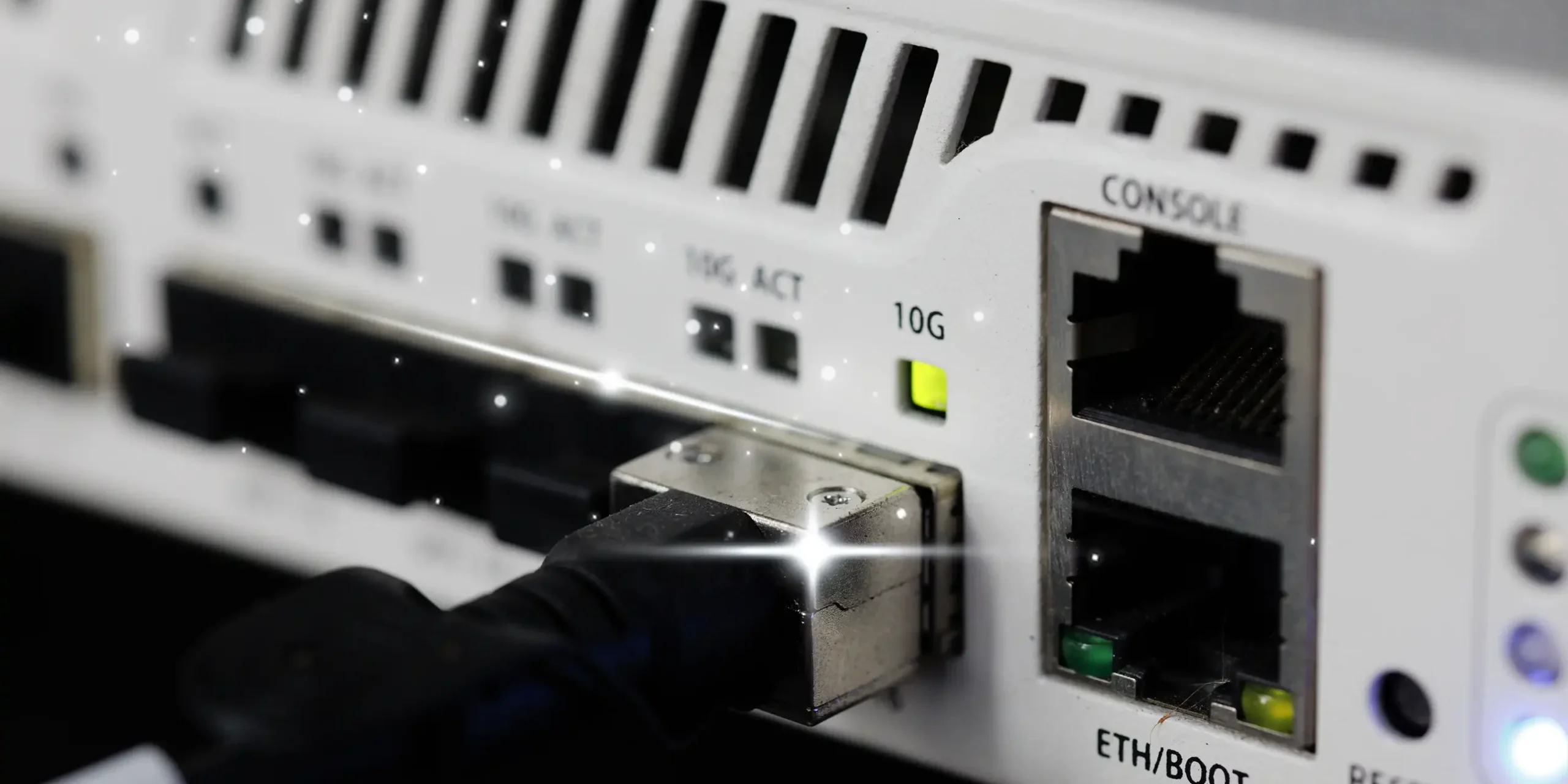
High-frequency data cables are the connective tissue of AI infrastructure. The material physics of copper is constraining them. Here’s what the research shows — and what it means for your next design decision.
The Physics Problem Copper Can’t Outrun
The data center copper problem is usually framed as a supply chain issue. It is that — and we’ll get to it. But for engineers selecting materials for high-frequency interconnects, the more immediate constraint is physical: copper’s AC resistance rises with frequency, and at the signaling rates required by today’s AI infrastructure, that rise is steep.
The mechanism is called the skin effect. When alternating current flows through a conductor, the changing magnetic field generates eddy currents that push charge carriers toward the surface of the wire. At low frequencies, current distributes fairly evenly across the conductor’s cross-section. As frequency climbs, current concentrates in an increasingly thin layer near the surface — the “skin depth” — leaving the interior largely unused. Since effective resistance scales inversely with the conducting cross-section, resistance rises. The relationship is not linear: it scales with the square root of frequency, meaning that doubling frequency increases resistance by roughly 41%.
For power delivery at 60 Hz, skin depth in copper is around 8.5 mm — larger than most wire radii, so it barely matters. For a 400G DAC operating with PAM4 signaling at 56 Gbps per lane, the peak frequency per lane is ~14 GHz. For 800G, each of eight lanes now runs at 112 Gbps, pushing the peak frequency content to ~28 GHz. At that frequency, copper losses from skin effect and dielectric absorption roughly double compared to 400G.
The practical consequence is visible in reach: passive copper DACs that could reliably cover 3–5 meters at 400G are limited to roughly 2 meters at 800G. That matters enormously in AI/ML cluster architecture. NVIDIA’s GB200 NVL72, for example, uses thousands of copper NVLink cables within a single rack for scale-up connectivity. As GPU density increases and racks grow taller, those two meters are becoming a hard architectural ceiling.
The result is a “dead zone” between approximately 3 and 7 meters: too far for passive copper, too close to justify the cost and power of optical transceivers. Active Electrical Cables (AECs) fill some of that gap with signal-conditioning electronics, but they add cost, power draw, and failure points. The underlying copper attenuation problem doesn’t go away — it’s just managed.
This isn’t a problem that better copper engineering can solve. It’s a property of the material.
Why Advanced Carbon Materials Behave Differently at High Frequencies
Copper is an isotropic conductor. Electrons scatter in all directions. At high frequencies, the skin depth model applies cleanly — and unfavorably. Resistance climbs on a well-understood curve that materials engineers have been fighting for decades with increasingly elaborate workarounds: Litz wire, silver plating, hollow conductors.
Advanced carbon materials have a fundamentally different charge-transport structure. Individual carbon nanotubes behave as quasi-one-dimensional conductors: electrons are confined along the fiber axis and, in ideal conditions, travel ballistically — without scattering — over distances that would produce significant resistive losses in copper. While macro-scale CNT fiber yarns don’t fully realize the ballistic transport of individual nanotubes, they inherit enough of this structural character that they respond to increasing frequency in a qualitatively different way.
The experimental evidence is unambiguous at MHz-range frequencies. Kim et al. (2021), publishing in IEEE Transactions on Nanotechnology, measured AC resistance in CNT yarn and copper wire up to 10 MHz using impedance analysis. Their finding:
“The increasing rate of AC resistance in CNT yarn is lower than in Cu wire as frequency increases, so that it causes lower CNT yarn resistance at higher frequencies.” — Kim et al., IEEE Transactions on Nanotechnology, 2021
This was independently confirmed by Tawfik et al. (2021) in a wireless power transfer (WPT) charging system study, also published in IEEE Transactions on Nanotechnology. Critically, this study used DexMat’s own Insulated Galvorn CNT Twisted Yarn — cited by name and product URL — as the test material. The results were direct and quantified:
- 25% lower AC resistance than copper at approximately 7 MHz
- 83.58% vs. 76.5% system efficiency at 50W output power — a meaningful gap that widens as magnetic coupling decreases
- 37.8% lower operating temperature at the same resonant current (36.8°C vs. 59.2°C for copper)
A third study, Ehab et al. (2021, IEEE Transactions on Nanotechnology), extended this picture to the proximity effect — a secondary source of AC losses in multi-conductor cables where adjacent conductors’ magnetic fields distort current distribution. CNT fiber yarn showed attenuated proximity losses compared to both solid and Litz copper conductors.
Taken together, these studies point to the same conclusion: Galvorn does not follow the conventional solid-conductor resistance-vs.-frequency curve. The structural character of the fiber changes the physics.
A note on the frequency gap — and why it matters for your evaluation
The published research demonstrating Galvorn’s AC resistance advantage is robust in the MHz range (up to ~10 MHz). Modern high-performance DAC applications operate at peak frequencies in the tens of GHz. That is a meaningful gap, and we want to be direct about it.
The structural character of the fiber produces anisotropic resistance — and that anisotropy works in Galvorn’s favor as frequency rises. Characterization of Galvorn at GHz frequencies representative of 400G/800G DAC applications is an active area of research and customer qualification. Customers currently testing Galvorn for their own wire and cable applications are seeing results consistent with the published research, though that data remains proprietary.
The physics is compelling and the published evidence is strong. The open question is how that performance translates to your specific application — your frequency profile, your form factor, your system architecture. That’s not a gap in the technology; it’s the normal work of qualifying a new material. It’s also exactly where the most interesting engineering conversations happen.
If you’re evaluating advanced materials for high-frequency cable applications, we’d like to be part of that conversation. We’re actively working with customers on exactly these questions — and the data from those engagements is what will close the loop.
What This Means for DAC Design in AI Data Centers
If you can hold conductivity performance steady as frequency rises, the downstream design freedoms are significant. Lower AC resistance growth at high frequency translates to better signal integrity at longer distances — directly addressing the 3–7 meter dead zone that passive copper cannot reach at 800G. But the high-frequency advantage is only part of the picture.
Cable geometry and design trade-offs
In controlled impedance cables like DACs, conductor geometry is tightly coupled to electrical performance. Galvorn’s high-frequency conductivity advantage opens up design space that copper forfeits: the same electrical performance may be achievable with a smaller conductor cross-section, enabling thinner cables — or alternatively, the same geometry may support longer reach. Which trade-off makes sense depends on your application and will be determined through characterization. Either way, the constraint copper imposes isn’t.
Thermal performance
Two material properties are directly relevant for high-density AI data center deployments:
- Thermal conductivity: Galvorn exhibits approximately 17% higher thermal conductivity than a single copper wire, enabling more effective heat dissipation from the conductor itself. In liquid-cooled power distribution architectures — increasingly relevant in high-density AI data centers — this is particularly significant: liquid cooling efficiency scales with the thermal conductivity and surface area of the conductor. Galvorn’s fibrous structure provides substantially greater surface area than a solid copper conductor of equivalent cross-section.
- High-temperature strength retention: Galvorn maintains its mechanical integrity at elevated temperatures, unlike copper, which softens and loses tensile strength. In high-load cable runs where resistive heating is a concern, this directly affects cable longevity and reliability.
The Supply Chain Dimension
The physics argument for Galvorn in high-frequency interconnects stands independently of copper supply. But for engineers making long-range material strategy decisions, the supply context is worth understanding.
AI-driven data center construction is, at its core, a massive copper demand event. Studies of large-scale data center construction put copper intensity at roughly 27 tonnes per megawatt of applied power. At that rate, a 1 GW AI data center would require approximately 27,000 tonnes of copper.
S&P Global’s analysis, “Copper in the Age of AI,” projects a 10 million metric ton supply shortfall by 2040. Global copper supply is on track to peak around 2030 and then decline. New mines take an average of 17 years to reach production. Six countries control two-thirds of global copper mining. China dominates smelting capacity.
For a materials engineer, this creates a straightforward risk calculus: you are designing with a component whose critical raw material has a structural supply problem on a known timeline. That’s not a reason to abandon copper tomorrow, but it is a reason to begin qualifying alternatives now — before the supply pressure forces your hand.
Galvorn is produced from carbon-based feedstocks, with a clear pathway to domestic natural gas as a primary input — an abundant, low-cost, and geopolitically stable resource. We’re actively working with partners to build that supply chain. The long-term vision is a sovereign, domestic source of a critical conductive material, independent of the constrained and concentrated global copper market.
Where This Technology Stands Today
Galvorn is produced and shipped today from DexMat’s facility in Houston, Texas, in form factors designed for industrial scale: fiber, yarn/wire, and film, compatible with standard manufacturing processes.
For high-performance DACs — particularly 400G and faster, for AI/ML clusters and hyperscalers — Galvorn’s combination of high-frequency conductivity advantage, weight reduction, and thermal properties puts it at the intersection of the problems data center engineers are actively trying to solve.
Active customer development is underway in wire and cable and related applications. Results to date are consistent with the published research.
The right first step is characterization against your specific application: get a sample, define your frequency and form factor requirements, and let the data drive the evaluation.
References
- Tawfik et al. (2021). “On Using CNTFs-Based Wires for High Frequency Wireless Power Transfer Charging Systems.” IEEE Transactions on Nanotechnology, vol. 20. DOI: 10.1109/TNANO.2021.3119695
- Kim et al. (2021). “Skin Effect-Related AC Resistance Study in Macroscopic Scale Carbon Nanotube Yarn Applicable to High-Power Converter.” IEEE Transactions on Nanotechnology, vol. 20. DOI: 10.1109/TNANO.2021.3076472 | ieeexplore.ieee.org/document/9419760
- Ehab et al. (2021). “Proximity Effect Study of Macroscopic-Scale Carbon Nanotube Fiber Yarn in MHz Region.” IEEE Transactions on Nanotechnology. | ieeexplore.ieee.org/document/9599530
- Vitex LLC (2025). “800G Data Center Interconnect Guide.” | vitextech.com
- Visual Capitalist. “Why Copper Is Critical for Data Centers.” | elements.visualcapitalist.com
- BHP. “Why AI Tools and Data Centres Are Driving Copper Demand.” January 2025. | bhp.com
- S&P Global. “Copper in the Age of AI.” January 2026.