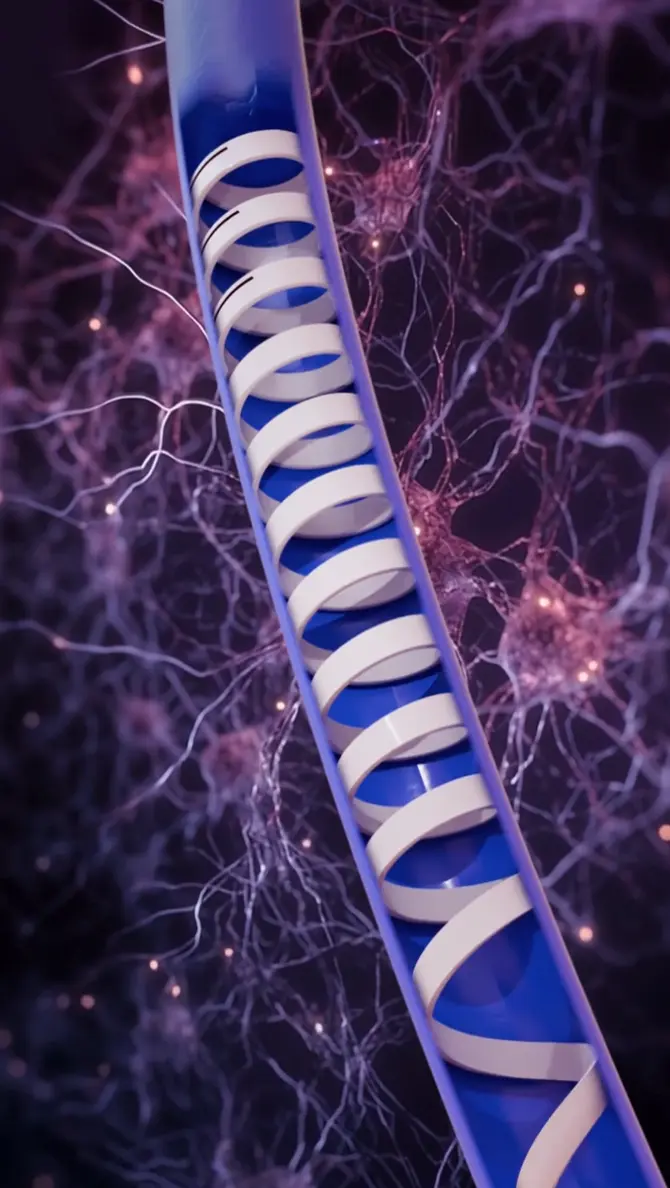
A Galvorn Case Study

Watch video for an overview of NeuroBionics.
SNAPSHOT
Galvorn Enables Next-Gen Miniaturized Neuromodulation Technology
- Industry: Medical Devices
- Application: Microscale Stimulation Electrode and Conductive Wire
- Galvorn Properties Utilized: Electrical Conductivity, Strength, Corrosion Resistance
- Result: The creation of a minimally-invasive, miniaturized neurostimulation device.
THE CHALLENGE
Miniaturizing Electrodes Without Sacrificing Performance
NeuroBionics Inc., a pioneer in medical device innovation, is developing a highly miniaturized, minimally-invasive neuromodulation technology that can expand access to transformative treatments for epilepsy, depression, and chronic pain.
The core component of this device is the stimulation electrode. According to Nicki Driscoll, CTO of NeuroBionics, the primary obstacle lay in the charge injection capacity of traditional materials.
"Traditional metallic electrode materials, like Platinum-Iridium (PtIr), suffer from low charge injection capacity when miniaturized," Driscoll explains. "This limitation severely restricted the physical size we could achieve while still delivering safe and effective neurostimulation pulses."
The impact was clear: the device could not be manufactured at the necessary microscale using conventional technology, leaving a significant product opportunity unrealized. While Platinum (Pt) offered adequate performance, it was expensive and lacked the efficiency needed for optimal current pulse delivery in their application.
THE SOLUTION
Harnessing the Power of Galvorn
To overcome the performance and size limitations, NeuroBionics turned to Galvorn for its extraordinary material properties, specifically its high intrinsic surface area and resulting high charge injection capacity.
NeuroBionics integrated Galvorn as both a microscale stimulation electrode and a conductive wire within their device. The material's combination of electrical conductivity, strength, and exceptional corrosion resistance was precisely what the application required for reliable, long-term performance in a physiological environment.

THE SOLUTION
Enabling a Microscale Device
By switching to Galvorn, NeuroBionics successfully resolved its most critical design challenge: effective neurostimulation from microscale electrodes. Galvorn’s unique electrical, mechanical, and thermal properties are critical to unlocking the miniaturization and efficiency of their devices. With their minimally invasive approach, they can comfortably deliver neuromodulation therapies in hard-to-reach places in the body, expanding the accessibility of these transformative treatments:
The final product represents a major step forward in the field of therapeutic neuromodulation.
By embracing Galvorn and enabling a truly miniaturized, minimally-invasive neuromodulation platform, NeuroBionics Inc. positions itself at the forefront of the next wave of neurotechnology innovation.
Their breakthrough aligns with a neuromodulation industry forecast to grow from roughly USD 5.8 billion in 2024 to over USD 10.4 billion by 2030 (CAGR ~8.5 %) — with some estimates pointing toward even steeper growth of up to USD 25 billion+ by the early-to-mid 2030s (CAGR ~10-12 %).*
In that context, mastering the material and engineering challenge of microscale electrodes is not only a technical achievement — it’s a strategic asset that could enable NeuroBionics to capture a larger share of a high-growth market, enter new clinical niches, and potentially deliver differentiated therapies that compete in an evolving therapeutic ecosystem.
* Sources: Grand View Research, Precedence Research